CSE: BUX | OTCQB: BMKDF | FSE: 20B

Comprehensive Metabolomics Panel

A Blood-Based Liquid Biopsy Platform Powered by AI for Early Lung Cancer Risk Stratification

BioMark’s Comprehensive Metabolomics Panel (CMP) is an advanced, minimally invasive test designed to detect cancer at its earliest stages through precise metabolomic analysis and machine learning.

Comprehensive Metabolomics Panel

BioMark’s Comprehensive Metabolomics Panel (CMP) is the company’s flagship liquid biopsy platform. It is designed for early cancer risk stratification by analyzing subtle changes in metabolites, the small molecules produced by cellular activity.

Rather than relying on imaging or genetic markers alone, the CMP measures the biochemical output of cancer cells.

Key features of the platform:

BioMark is initially advancing the CMP for early lung cancer detection in high-risk populations. The panel is currently moving through laboratory accreditation, with first commercial availability targeted for Q4 2026.

Early Lung Cancer Risk Stratification

Lung cancer remains one of the deadliest cancers worldwide, largely because it is often diagnosed at advanced stages. Early detection significantly improves outcomes, yet current screening methods, such as low-dose CT, are limited by high false-positive rates and accessibility challenges.

BioMark’s Comprehensive Metabolomics Panel offers a blood-based approach to early lung cancer risk stratification. By analyzing metabolic changes in plasma, the platform identifies disease signals at Stage I with high accuracy, providing an objective tool that can complement or guide the use of imaging.

The algorithm has been validated in a diverse cohort of 2,910 cancer subjects and 677 controls, including patients with benign lung disease (COPD, asthma), ensuring high specificity in real-world populations.

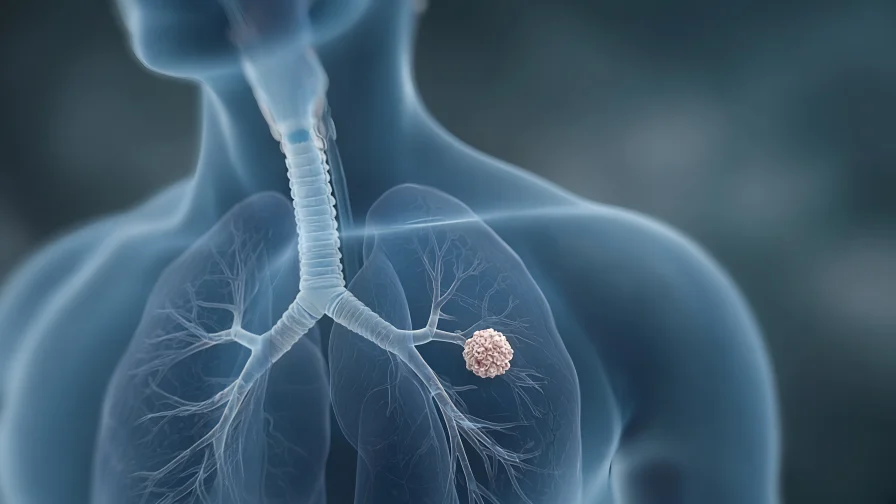
Translucent anatomical illustration of a human chest showing trachea, bronchial airways, lungs, and a single tumor mass in the left lung.

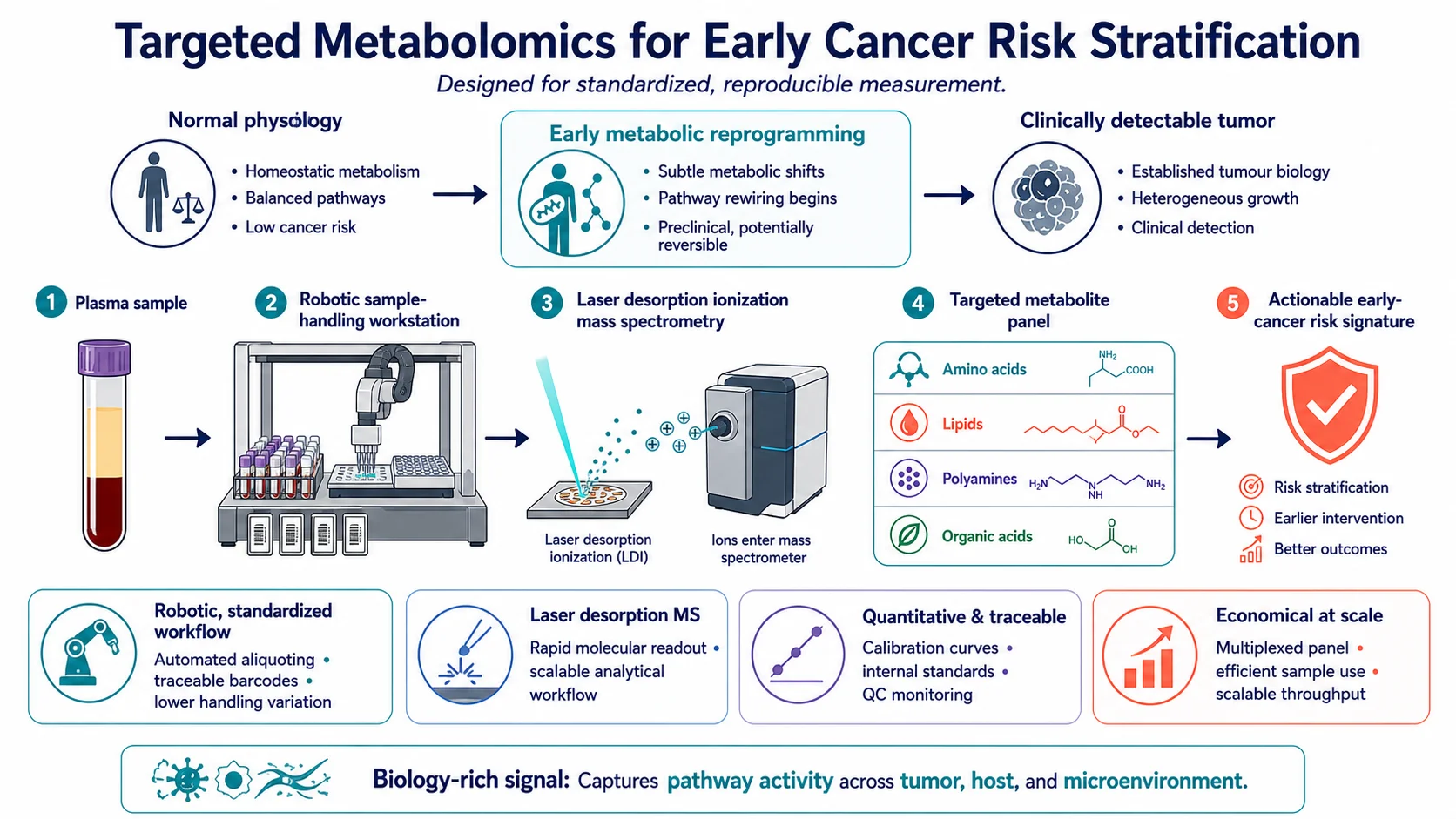
Targeted Metabolomics for Early Cancer Risk Stratification

Infographic of BioMark-style targeted metabolomics: plasma liquid biopsy, robotic sample handling, laser desorption ionization mass spectrometry, a metabolite panel of amino acids lipids polyamines and organic acids, and an early-cancer risk signature.
Targeted metabolomics workflow: plasma is processed on a robotic workstation, measured by laser desorption ionization mass spectrometry, and reported as a four-class metabolite panel for early cancer risk stratification.

BioMark’s metabolomics liquid biopsy starts with plasma and a robotic, barcoded sample-handling workstation so measurement stays standardized and reproducible. Laser desorption ionization mass spectrometry then reads a targeted, yet multi-class, comprehensive metabolomics panel of amino acids, lipids, polyamines, and organic acids, quantified with calibration curves, internal standards, and QC. 

That biology-rich readout captures pathway activity across tumor, host, and microenvironment and is designed to flag early metabolic reprogramming, subtle, potentially reversible pathway shifts that arise before a clinically detectable tumor. The output shown is an actionable early-cancer risk signature for risk stratification, earlier intervention, and better outcomes.

How the Test Works In Practice

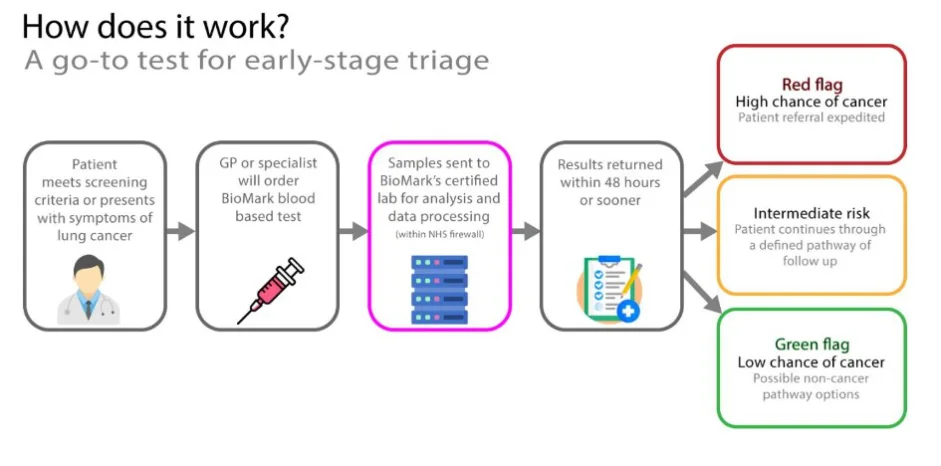
Flowchart of the BioMark Diagnostics blood-based lung cancer test: GP or specialist order, certified lab analysis within the NHS firewall, results in 48 hours, then red, intermediate, or green clinical flags.
How the BioMark blood-based test works as an early-stage lung cancer triage tool: ordered by a GP or specialist, processed in a certified lab within the NHS firewall, with results in 48 hours and red, intermediate, or green pathway flags.

BioMark’s metabolomics liquid biopsy is shown here as a go-to blood-based test for early-stage lung cancer triage: a patient who meets screening criteria or presents with symptoms has the test ordered by a GP or specialist; the sample is analyzed and processed in BioMark’s certified lab within the NHS firewall; and results are returned within 48 hours or sooner. 

The output is a three-tier clinical flag:

Red for a high chance of cancer and an expedited referral, or
Yellow for an intermediate defined follow-up pathway, or
Green for a low chance of cancer and possible non-cancer options. 

On the platform page, that triage result is the clinical use of the comprehensive metabolomics panel and the AI cancer metabolomic score.

BioMark slogan banner: BioMark | Because catching it early matters.

Promising Signals Across Multiple Cancers Beyond Lung Cancer

Supports Development of Cancer-Specific Signatures for Lung, Breast, and Neuroendocrine Tumors.

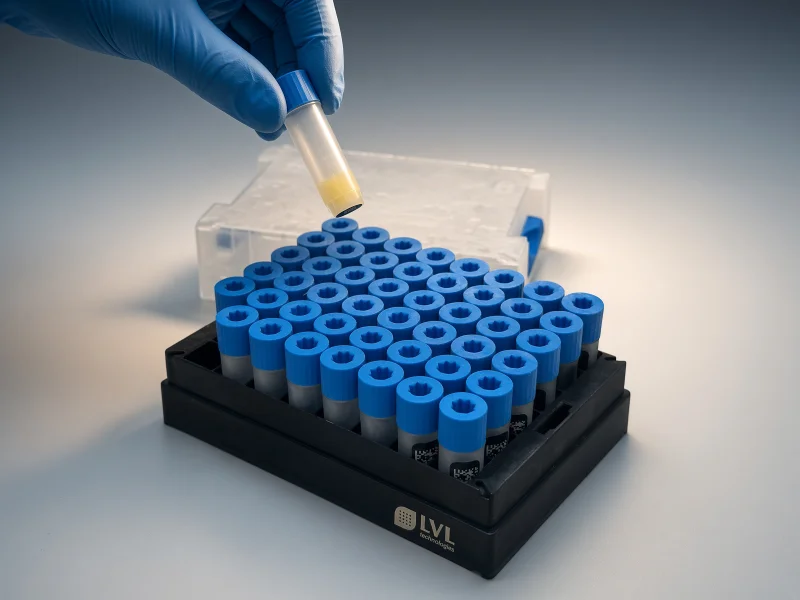
Hand selecting a barcoded sample vial from a rack of blue-capped aliquots in the BioMark Québec metabolomics laboratory.

BioMark’s platform is built around amplified metabolic readouts, including chemistry and broader metabolomic panels aimed at improving tumor specificity.

For neuroendocrine tumors, the broader field is also reinforcing the case for metabolomics: recent studies describe distinct plasma and tissue metabolic signatures in pulmonary NETs, pancreatic NETs, and other neuroendocrine neoplasms, with signals tied to lipid metabolism, amino acid pathways, glutamate, acylcarnitines, and tumor aggressiveness.

For breast cancer, recent clinical reviews continue to identify metabolomics as a promising tool for early diagnosis and clinical interpretation, especially when integrated with other biomarker layers.

Sign up for the latest BioMark news