
CSE: BUX | OTCQB: BMKDF | FSE: 20B
BioMark's EarlyCancer Risk Stratification
Metabolomics and Biomarkers
BioMark focuses on the critical role that metabolomics and biomarkers play in early stage cancer detection, management, and treatment.
What is Metabolomics?
Metabolomics is the comprehensive study of small-molecule metabolites, the functional end-products of cellular biochemistry that reveal what is actually happening inside the body in real time. Unlike genomics, which shows genetic potential, metabolomics captures the dynamic phenotype: the downstream biochemical consequences of cancer, environment, and lifestyle that emerge long before tumors become visible on imaging.
BioMark™ has built its entire platform on this principle.
Most of us assume our health is largely set by the DNA we’re born with, but what actually matters is the constant chemical activity happening inside our cells right now. Metabolomics reads those real-time signals, which often shift long before a tumour appears on any scan or causes noticeable symptoms. Lung cancer is the clearest example, still one of the deadliest cancers because it’s usually found too late, while current screening methods generate far too many false alarms that create anxiety and unnecessary procedures. By detecting these early chemical changes through simple blood or urine tests, metabolomics can help identify higher-risk individuals and catch the disease at a stage where treatment has a much greater chance of success. BioMark is turning this science into practical tools that give patients and doctors clearer, earlier answers.
The Power of Metabolomics
A Tool for Diagnostic Application
Almost every factor affecting health, from genetics and the microbiome to disease and lifestyle, exerts its influence by altering metabolite levels. By producing the most accurate, comprehensive picture of the metabolome, hence metabolomics provides actionable insights to help make better clinical decisions.
Metabolism refers to life-sustaining biochemical processes that occur within all living organisms. Every organism strives for metabolic homeostasis and constantly produces a variety of metabolites to achieve this biological balance. This biochemical composition is also known as the metabolome.
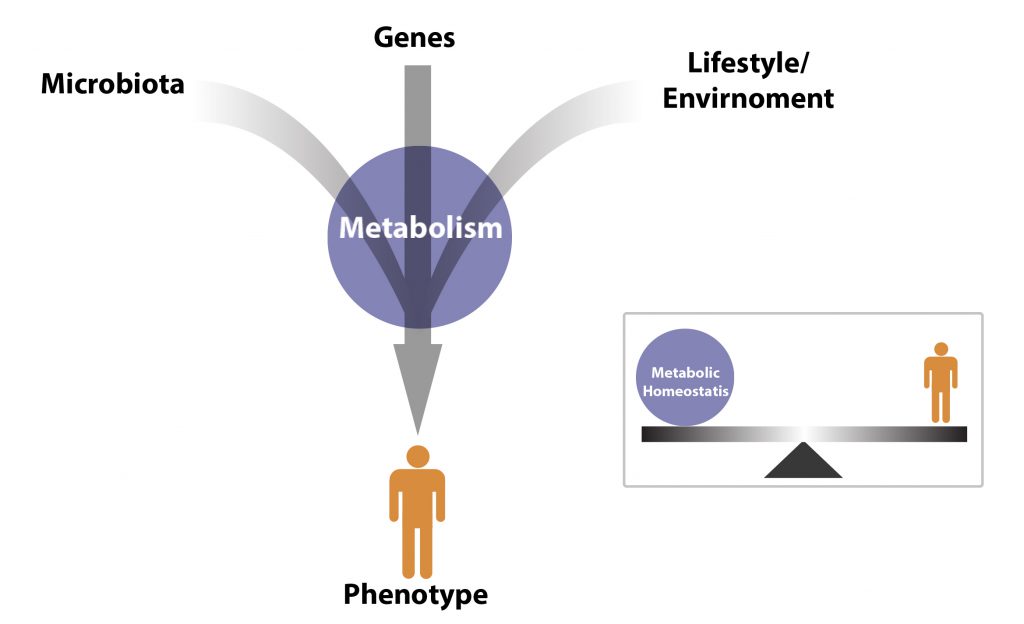
When an organism’s biological systems are disturbed by disease, genetic mutations or environmental factors, its metabolic profile often changes. This makes metabolites excellent candidates for biomarkers and particularly useful for understanding disease states, toxicities, drug interactions, mechanisms of action and other areas of biology. Nearly every internal and external factor impacting a living organism exerts its influence by subtly altering metabolite levels. Because the metabolome is at the nexus of all these factors, it serves as a surrogate to the phenotype itself.
Not only is the metabolome vitally important, it is also well understood. The pathways within the metabolome have served as the foundation of life sciences research for more than a century and have been extensively explored and mapped.
Early Cancer Risk Stratification Through Metabolomics
Cancer does not begin as a mass you can always see on a scan. It begins as a biological process, and one of the earliest changes is altered metabolism.
Why metabolomics works for early detection
Metabolomics measures small molecules that change when cells are under stress, growing abnormally, or adapting to disease. Because metabolites sit downstream of genes, proteins, treatment effects, inflammation, and environmental exposures, they often provide a more immediate readout of what is happening in the body right now.
• Detects biochemical changes that can occur before cancer is visible on imaging.
• Measures real-time metabolic activity rather than relying on a single static marker.
Tumors must reprogram energy use, lipid handling, amino acid metabolism, and redox balance to survive and grow, and those changes can appear before a lesion is large enough to be obvious on imaging. That makes metabolomics especially relevant for early detection, risk stratification, treatment monitoring, and recurrence surveillance.
Cancer is a metabolic disease
Cancer is increasingly understood not only as a genetic disease, but also as a disease of altered metabolism with distinct biochemical hallmarks. Across many tumor types, researchers repeatedly see shifts in glycolysis, fatty acid oxidation, amino acid utilization, membrane lipid remodeling, and oxidative stress pathways.
This matters clinically because these metabolic changes can be measured in accessible samples such as plasma or urine, creating the possibility of earlier, less invasive detection than approaches that depend on visible tumor burden alone.
Summary - Why metabolomics can detect cancer early
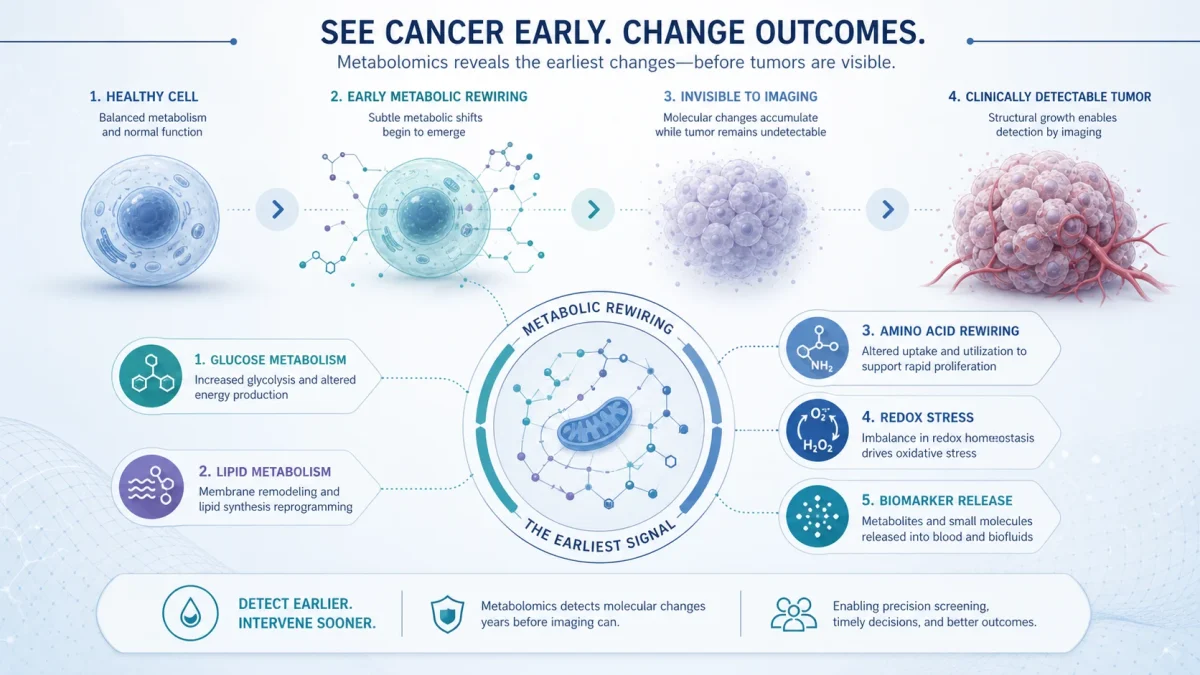
- Cells experience early disease-related stress.
- Metabolic pathways shift to support survival and growth.
- Small-molecule metabolites change in blood or urine.
- These signals can be measured before tumors become easily visible on scans.
- The result is a potential earlier window for detection and intervention.